The Patron
Santa Febronia
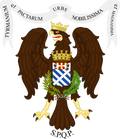
Febronia di Nisibis is Patti's listed patron, celebrated on the last Sunday of July. Her simulacrum and reliquary are kept in the cathedral.

 — Castellesi

Patti sits on a hill above the Tyrrhenian coast at the western edge of the province, with the promontory of Tindari — ancient Tyndaris, and today one of its own frazioni — rising out of the sea a few kilometres away. It has been a bishop's seat since 1131 , and the tomb of Adelasia del Vasto , wife of Count Roger I and mother of the first king of Sicily, is in its cathedral.
For a researcher those two facts do more work than anything else on this page. Patti was one of the four districts the province's conscription records are organised under, and it is the seat of a diocese that today covers 41 comuni of the Nebrodi. If your family is from anywhere along that coast or in those mountains, the church trail runs through Patti even if the civil one does not.


The local speech is Sicilian, Nebrodi Messinese variety.
Patti's origin is the decline of somewhere else. Tyndaris was founded on the promontory in 396 BC by Dionysius the Elder of Syracuse, and lived on as a Greek, Roman and later Saracen-era centre. As it faded, the settlement on the hill behind grew. The older name for the site is Epacten , from the Greek for on the bank or among the waters , and Sikel and Ausonian occupation is recorded there from the thirteenth and twelfth centuries BC.
The Roman period left something remarkable in the comune's own territory. The Villa Romana di Patti is a late imperial residence of roughly twenty thousand square metres, built in the fourth century AD over the remains of a villa of the second or third, with a peristyle court, an apsed hall, baths and polychrome floor mosaics. It was found by accident in 1973 , during construction of a stretch of motorway.
The medieval town begins with the Normans. In 1094 the Great Count Roger d'Altavilla founded the Benedictine monastery of the Santissimo Salvatore here. In 1131 the diocese of Patti and Lipari was erected; the two sees separated in 1399 .
And then the episode the town is known for. Adelasia del Vasto , widow of Count Roger I and mother of Roger II , the first king of Sicily, retired to Patti after her disastrous marriage to Baldwin I of Jerusalem. She died here in 1118 and was buried, by her own wish, in a chapel of the monastery. Her remains now lie in the cathedral in a Renaissance sarcophagus of 1557 .
The basilica cathedral of San Bartolomeo is the town's centre in every sense. Its present fabric is largely eighteenth-century, but a fine Norman portal has been remounted on the main facade, its clustered colonnettes carrying late Romanesque capitals with winged, two-faced zoomorphic and human figures. Inside are the chapel of Santa Febronia of 1760 , an organ of 1758 , a wooden crucifix of the sixteenth century in an eighteenth-century reliquary, a marble Virgin and Child of about 1500 by Antonio Vanella of Carrara, and an Adoration of the Shepherds attributed to the Flemish painter Guglielmo Borremans (1725).
Beside it stand the bishop's palace and the seminary — an administrative complex disproportionate to the town's size, and the reason so much of the region's church record passes through here.


Carry your heritage with pride. Timeless designs inspired by the heart of Messina.
SHOP THE COLLECTION →


Discover the beauty, culture and traditions of Messina and its remarkable comuni.
EXPLORE MESSINA →From the mountains to the sea, Sicilia is a region of history, flavor and soul.
EXPLORE SICILIA →From the passenger index
At least 2,406 people who gave Patti as their home are recorded by name among Italian arrivals in the United States — each with the ship they sailed on and the day they landed.
A floor, not a total. The index covers arrivals through 1912, holds nothing between May 1907 and December 1911, and many passengers were written down with no home town at all. Where a name is there, it is there with its record.
Have Orso look for your family →The nearest major airport is Palermo, Catania, Trapani, or Comiso Airport, depending on the destination.
Patti sits at about 157 metres above the coast, on the Tyrrhenian line between Messina and Cefalù. The historic centre still holds its medieval fabric — narrow lanes under arches, gathered around the cathedral, the bishop's palace and the seminary.
Go into the basilica cathedral for the Norman portal remounted on the facade, the chapel of Santa Febronia, and the sarcophagus of Queen Adelasia in the right transept. The Museo Diocesano in the bishop's palace is next door.
Then take the two excursions that are actually within the comune. The Villa Romana , found in 1973 under a motorway alignment, with its peristyle, baths and mosaics. And Tindari on its promontory: the Greek-Roman theatre, the archaeological park of the city founded in 396 BC, the sanctuary of the Black Madonna at the summit, and the Marinello lagoons shifting below. For a descendant, the walk up to Tindari is the one your family made too.
Archives and registers
Sicilian registration starts in 1820. Patti heads its own conscription district, and the 1822 bull moved twenty-four parishes here from Messina in 1824 - that date decides which diocesan archive holds a baptism.
Archivio di Stato di Messina on Antenati
The holdings statement: Stato civile 1820-1865, the note that the allegati are almost entirely absent, and the conscription lists for the Messina, Castroreale, Patti and Mistretta districts, classes 1840-1948.
antenati.cultura.gov.itArchivio di Stato di Messina - the history
The archive's account of the 25 May 1943 incendiary raid and the fonds destroyed. The citation to keep when a pre-1820 trail goes cold in this province.
asmessina.cultura.gov.itArchivio di Stato di Messina - complete index of fonds
What survives fond by fond, with dates and quantities - the fastest way to establish whether a source exists at all.
asmessina.cultura.gov.itDiocesi di Patti - territory and history
Lists the 41 comuni of the diocese, its 84 parishes and six vicariates, and records the 1822 bull and its 1824 execution transferring twenty-four centres from the Archdiocese of Messina.
it.wikipedia.orgAntenati - Messina registers
Confirm which years for Patti are catalogued and available as images, and check the neighbouring Nebrodi comuni in the same search.
antenati.cultura.gov.itThe journey does not end at the boundary of one comune. The province, the region and the neighbouring towns often hold the rest of the picture.

Patti is more than a place on a map. It is a part of you.
FIND YOUR COMUNE →