The Patron
San Pantaleone
San Pantaleone is Vallo della Lucania's patron, celebrated on 27 July. The cathedral dedicated to him holds an ampoule of the saint's blood.

 — Castellesi

Vallo della Lucania is the administrative centre of the Cilento: a bishop's seat, a court seat, and the town everyone in the surrounding valleys goes to for anything official. That has been true since the early nineteenth century, and it is the reason its name appears on so many documents belonging to families who never lived here.
It is also the single most important thing an Italian-American researcher on this side of the province needs to understand. The civil registers of the Vallo della Lucania court district were not transferred to the State Archives, and they are not on Antenati. If you have searched the usual places and found nothing, the records are very probably intact — just somewhere else.


The local speech is Cilentano, southern Campanian group.
Vallo's rise was commercial before it was administrative. Through the eighteenth century the town grew wealthy on silk-working and leather tanning , and on a market that drew the surrounding valleys in. That wealth carried it through the famines of the period — including the catastrophic grain famine of 1764 — rather better than most of the Cilento managed.
Prosperity paid for a clergy-led intellectual life: schools of theology, philosophy and grammar were founded here in the later eighteenth century, and Vallo became the place in the Cilento where an ambitious family sent a son to be educated.
The French administration formalised what commerce had already built. Vallo was made a district capital, and from 1811 to 1860 it was the seat of its own distretto within the Kingdom of the Two Sicilies. Public schools were established in 1809 ; the circondario court opened in 1850 ; the diocese was seated here in 1851 . Vallo took a conspicuous part in the anti-Bourbon risings of 1820–21, 1828 and 1848.
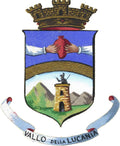
After unification the economy slipped. Population growth outran what the land and the workshops could support, and small cultivators struggled against the large estates. Vallo kept its offices — court, curia, schools — and today it remains a service town for a wide part of the Cilento, seat of the national park authority as well as the tribunal and the bishop. Its coat of arms still records how it was made: a heart pierced by two hands for Corinoti , a tower with a sentinel for Spio .


Carry your heritage with pride. Timeless designs inspired by the heart of Salerno.
SHOP THE COLLECTION →


Discover the beauty, culture and traditions of Salerno and its remarkable comuni.
EXPLORE SALERNO →From the mountains to the sea, Campania is a region of history, flavor and soul.
EXPLORE CAMPANIA →From the passenger index
At least 434 people who gave Vallo della Lucania as their home are recorded by name among Italian arrivals in the United States — each with the ship they sailed on and the day they landed.
A floor, not a total. The index covers arrivals through 1912, holds nothing between May 1907 and December 1911, and many passengers were written down with no home town at all. Where a name is there, it is there with its record.
Have Orso look for your family →The nearest major airport is Salerno Costa d'Amalfi Airport or Naples, depending on route.
Vallo sits inland at around 380 metres, in a valley between Monte Gelbison and Monte Stella, about thirteen kilometres from the sea at Ascea and Casal Velino. It is a working town rather than a scenic one, and that is precisely its interest for a descendant — this is where the court, the curia, the market and the schools were.
The two things worth going out of the centre for are Pattano , for the Basilian abbey complex, and the road up toward Monte Gelbison , which climbs to the sanctuary at 1,700 metres. If your family was from any comune in the Cilento, one or the other is almost certainly part of their history, whether or not they were ever registered in Vallo.
Archives and registers
Vallo's registers to 1865 are at Salerno and online. Everything after 1866 stayed at the court. Knowing which side of that line your date falls on saves months.
Archivio di Stato di Salerno on Antenati
States explicitly that the registers of the Vallo della Lucania and Sala Consilina districts remain at their respective courts. This is the citation to keep.
antenati.cultura.gov.itArchivio di Stato di Salerno — the fonds
The archive's guide to its holdings, including the notarial and private-deed series with a Vallo office among them.
archiviodistatosalerno.cultura.gov.itAntenati — registry search for the province
Use it to confirm the 1809-1865 coverage for Vallo and for the neighbouring Cilento comuni, and to see where the italiano series simply does not appear.
antenati.cultura.gov.itComune di Vallo della Lucania
The municipal site and its ufficio di stato civile, which holds the comune's own first copies for the years the archive does not have.
comune.vallodellalucania.sa.itThe journey does not end at the boundary of one comune. The province, the region and the neighbouring towns often hold the rest of the picture.

Vallo della Lucania is more than a place on a map. It is a part of you.
FIND YOUR COMUNE →