The Patron
San Michele Arcangelo
The town keeps its patronal feast on 29 September, and celebrates it in the Collegiata that carries the archangel's name.

 — Castellesi

Solofra lies in a bowl of the Monti Picentini at 400 metres, in the province of Avellino but opening west, through Montoro, toward the Sarno plain and Salerno.
It is a working town and has been for centuries — one of the four principal leather-tanning centres in Italy. Its records are split the same way its geography is: the civil registers belong to Avellino, the parish registers to Salerno.


Italian is standard, and local speech is the Solofran variety of Campanian — the town calls itself Sulofre. The tanning trade carried its own working vocabulary alongside it.
The valley was settled from the Bronze Age, and the first real town here was Samnite — a village in the bowl, with a warriors' necropolis on the Starza hill that has given up tombs to the present day. The name is thought to come through Oscan from the Latin saluber , healthy: a clean, sheltered place to live.
In the tenth century a Lombard castle went up on the hill below Monte Pergola, part of a defensive chain that ran through the Castelluccia spur to the castle of Serino and watched the Sabato valley. Little of it stands now.
The town's great century was the seventeenth. The Orsini built the Palazzo Ducale in the late 1500s, and the Collegiata di San Michele Arcangelo was filled with paintings by a son of the town: Francesco Guarini , twenty-one of whose canvases are set into the gilded ceiling of the transept, painted between 1637 and 1642 . His father Giovan Tommaso did the nave, and their workshop was carried on by Angelo Solimena . For a town of this size to produce a painter of that standing, and to keep the work where he left it, is unusual.
Through all of it the town worked leather. Solofra has dressed hides for centuries and is one of four principal tanning centres in Italy — the trade is not a modern arrival but the continuous economic fact of the place, and the one most likely to appear beside a family name in the records.


Carry your heritage with pride. Timeless designs inspired by the heart of Avellino.
SHOP THE COLLECTION →


Discover the beauty, culture and traditions of Avellino and its remarkable comuni.
EXPLORE AVELLINO →From the mountains to the sea, Campania is a region of history, flavor and soul.
EXPLORE CAMPANIA →From the passenger index
At least 876 people who gave Solofra as their home are recorded by name among Italian arrivals in the United States — each with the ship they sailed on and the day they landed.
A floor, not a total. The index covers arrivals through 1912, holds nothing between May 1907 and December 1911, and many passengers were written down with no home town at all. Where a name is there, it is there with its record.
Have Orso look for your family →The nearest major airport is Naples International Airport (Capodichino).
Solofra is a working town rather than a scenic one, set in its bowl of hills with the tanneries on its edges. That is what it is, and for a descendant it is the point.
The centre can be walked. The Collegiata and its Guarini ceilings, the Palazzo Ducale and the Fontana dei Quattro Leoni in front of it are within a few minutes of each other, and the parish churches of the outer quarters — San Giuliano at the Fratta, Sant'Andrea Apostolo — are a short drive.
Above the town are the ruins of the castle and the Starza hill, where the Samnite necropolis was found.
Montoro is next door and shares the forania. Salerno , where the parish records are, is under an hour west.
La Collegiata di San Michele Arcangelo — the mother church, and the Guarini ceilings.
Il Palazzo Ducale — built by the Orsini in the late sixteenth century.
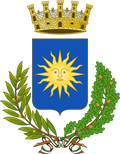
La Fontana dei Quattro Leoni — eighteenth-century travertine, carrying the town's sun.
Le conce — the tanneries, and the reason the town exists.
La collina della Starza — the Samnite necropolis above the town.
Montoro — the neighbouring comune, sharing Solofra's forania.
Archives and registers
The civil registers are at Avellino. The parish registers are at Salerno, in the forania of Montoro and Solofra.
The journey does not end at the boundary of one comune. The province, the region and the neighbouring towns often hold the rest of the picture.

Solofra is more than a place on a map. It is a part of you.
FIND YOUR COMUNE →