The Patron
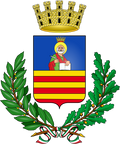
San Matteo
San Matteo is patron of Salerno and its archdiocese, with his feast and procession held on 21 September. The cathedral is dedicated to him, and the city has held his relics since at least the tenth century.

 — Castellesi

Salerno sits at the top of its own gulf, with the Amalfi coast to one side and a wide agricultural plain behind it. It was the capital of a Lombard principality, the home of medieval Europe's most famous school of medicine, and the seat of a province that runs from the sea to the mountains of the Cilento.
Like Avellino, the name does double duty. Salerno is a city. It is also a province of well over a hundred comuni — and for a family search the difference decides not only which town you are looking for, but whether its records are in the archive at all.


Italian is standard, while local speech belongs to the broader Campanian and Neapolitan family. Local speech includes noticeable variation between the coast, the plain and the Cilento interior rather than one uniform provincial variety.
Salerno's importance is older and stranger than its present size suggests. In the early Middle Ages it was the capital of a Lombard principality, and later a Norman capital — for a period one of the most significant cities in southern Italy.
Its lasting fame is the Schola Medica Salernitana, the school of medicine that flourished here from around the tenth century and is generally regarded as the oldest of its kind in western Europe. It drew on Greek, Latin, Arabic and Jewish medical learning at a time when few places in Europe drew on any of them, and its reputation carried Salerno's name across the medieval world.
The city later slipped from that prominence into the role it has held since: a working provincial capital and port, with the cathedral of San Matteo at its heart.
The province around it is unusually varied. North of the city is the Agro Nocerino-Sarnese, intensively farmed and industrialised early. West is the Amalfi coast. South and inland are the Piana del Sele, the Cilento hills and the Vallo di Diano — remote, mountainous country that in many ways has more in common with Basilicata than with the coast. A family from Salerno province could have come from any of these, and they were not the same world.


Carry your heritage with pride. Timeless designs inspired by the heart of Salerno.
SHOP THE COLLECTION →


Discover the beauty, culture and traditions of Salerno and its remarkable comuni.
EXPLORE SALERNO →From the mountains to the sea, Campania is a region of history, flavor and soul.
EXPLORE CAMPANIA →From the passenger index
At least 8,021 people who gave Salerno as their home are recorded by name among Italian arrivals in the United States — each with the ship they sailed on and the day they landed.
A floor, not a total. The index covers arrivals through 1912, holds nothing between May 1907 and December 1911, and many passengers were written down with no home town at all. Where a name is there, it is there with its record.
Have Orso look for your family →The nearest major airport is Salerno Costa d'Amalfi Airport or Naples, depending on route.
Most visitors treat Salerno as the place where the Amalfi bus leaves from. For a descendant it deserves better than that, and it also makes an unusually practical base — the coast, the plain, the Agro Nocerino-Sarnese and the Cilento are all reachable from here.
The old town is the part to walk: narrow streets running up from the sea, the cathedral of San Matteo with its crypt, the long seafront. It is a working southern city rather than a resort, and it is much closer to what your family knew than the coast road is.
Then go to the comune. The province is large and its parts are genuinely different, so the drive from the city to the town is also a lesson in what kind of place your family came from.
Duomo di Santa Maria degli Angeli e San Matteo — the cathedral and the crypt holding the relics of the city's patron.
The centro storico — the medieval streets climbing from the seafront, and the Giardino della Minerva, associated with the city's medical school.
The Lungomare — the long seafront promenade, where the city takes its evening walk.
Archivio di Stato di Salerno , piazza Abate Conforti 7 — where the provincial civil records are held, for the districts that deposited them.
Your family's comune — whether that means the Agro Nocerino-Sarnese, the coast, the Piana del Sele or the Cilento.
The Cilento — if that is where your family came from, allow proper time. It is mountainous, remote and slow to cross, and nothing about it resembles the Amalfi coast.
Archives and registers
Whether your comune's later registers exist here depends entirely on its court district.
Browse the Salerno civil registers on Antenati
Digitised registers for the province, arranged by comune within the Napoleonic, Restoration and Italian periods.
antenati.cultura.gov.itWhat the Salerno State Archive holds
The two deposits explained, and which tribunal districts were included. Essential before concluding a record is missing.
archiviodistatosalerno.cultura.gov.itThe journey does not end at the boundary of one comune. The province, the region and the neighbouring towns often hold the rest of the picture.

Salerno is more than a place on a map. It is a part of you.
FIND YOUR COMUNE →