The Patron
San Bartolomeo
San Bartolomeo is Benevento's listed patron, with his feast on 24 August.

 — Castellesi

Benevento is in Campania, and for most of its recorded history it was not part of the kingdom that surrounded it.
For nearly eight centuries the city belonged to the Holy See — a papal enclave sitting inside the Kingdom of Naples, governed from Rome, with its own administration and its own paperwork. That ended only in 1860. For anyone tracing a family here, it is not a historical curiosity. It is the reason the records look the way they do.


Italian is standard. Local speech may include Campanian and Neapolitan varieties, without naming a more specific Beneventan form.
Benevento's first great age was Lombard. It was the seat of a powerful duchy and later principality in the Samnite interior, and the Lombard legacy is still visible in the city — most famously at Santa Sofia, the eighth-century church built under Lombard rule.
That ended in 1077, with the death of the last prince, Landolfo VI. From then the city passed to the Holy See, and there it stayed. For close to eight hundred years Benevento was an enclave: papal territory entirely surrounded by the Kingdom of Naples, ruled by a papal delegate, its people subjects of Rome rather than of the Neapolitan crown.
There was one interruption. During the Napoleonic period at the start of the nineteenth century the enclave was briefly detached from papal rule — the French parenthesis that also explains why civil registration begins here when it does.
In September 1860, as Garibaldi's campaign swept the south, a provisional government was proclaimed in the city and papal authority ended. Benevento was annexed to the new Italian state, and a province was created around it, assembled from the city's own territory together with localities drawn from the surrounding Irpinian and Molisan country.
The province of Benevento is therefore younger than Italian unification, and it was built from pieces that had belonged to different states.


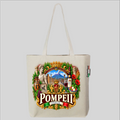
Carry your heritage with pride. Timeless designs inspired by the heart of Benevento.
SHOP THE COLLECTION →


Discover the beauty, culture and traditions of Benevento and its remarkable comuni.
EXPLORE BENEVENTO →From the mountains to the sea, Campania is a region of history, flavor and soul.
EXPLORE CAMPANIA →From the passenger index
At least 4,586 people who gave Benevento as their home are recorded by name among Italian arrivals in the United States — each with the ship they sailed on and the day they landed.
A floor, not a total. The index covers arrivals through 1912, holds nothing between May 1907 and December 1911, and many passengers were written down with no home town at all. Where a name is there, it is there with its record.
Have Orso look for your family →The nearest major airport is Naples International Airport (Capodichino).
Benevento gets very few foreign visitors, which is part of what makes it worth the trip. It is a working provincial capital with a Roman triumphal arch in the middle of it, a Lombard church older than most of Europe's cathedrals, and streets that show the papal centuries plainly.
For a descendant the city works as a base and as an education. Half a day here explains the province: the Roman layer, the Lombard layer, the long papal administration, and then the Italian one. After that, go to the comune.
The Sannio around it is hill country — vineyards, small towns on ridges, valleys that feel a long way from the Campanian coast even though the sea is not far. If your family came from one of these towns, the drive out is part of understanding what they left.
Santa Sofia — the eighth-century Lombard church, part of the UNESCO listing of Lombard sites in Italy, and the clearest survival of the city's first age.
Arco di Traiano — the Roman triumphal arch, standing in the middle of the modern city.
The Duomo — seat of the Archdiocese of Benevento.
The Archiepiscopal Seminary — which since 1996 has housed the Archivio di Stato, so the archive and the church history share a building.
Your family's comune — the towns of the Sannio, most within an hour.
The Strega distillery — in the city, and the reason the name is familiar in Italian-American households.
Archives and registers
The province was assembled after 1860 from an enclave plus Irpinian and Molisan territory — so a comune's older records may be elsewhere.
The journey does not end at the boundary of one comune. The province, the region and the neighbouring towns often hold the rest of the picture.

Benevento is more than a place on a map. It is a part of you.
FIND YOUR COMUNE →